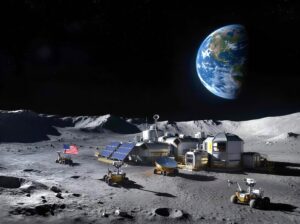
NASA IS HEADED TO THE MOONS SURFACE
NASA has just pivoted hard toward a permanent Moon base at the south pole, with a multi‑billion‑dollar plan to assemble the first surface outpost in stages between now and roughly 2030–2036 using a mix of NASA hardware, commercial landers, and international partners.flyingmag+4
Big picture: what NASA just announced
-
NASA rolled out a plan to spend about 20–30 billion dollars over the next seven years to build a Moon base near the lunar south pole, shifting focus away from the Gateway station in lunar orbit toward more work on the surface itself.cbsnews+2youtubeflyingmag
-
The idea is to fly two Artemis lander missions per year once things are running, build up “initial elements” of a base by around 2030, and grow that into a semi‑permanent outpost in the mid‑2030s.scientificamerican+3
In other words: the 2020s are about scouting and dropping hardware; the early 2030s are about turning that hardware into a real place people can live and work.
Who’s involved and what they’re doing
NASA isn’t doing this alone; it’s more like NASA is the general contractor and a long list of companies are the subs.
Key players and roles:
-
SpaceX and Blue Origin – Human Landing Systems (HLS): Both are building lunar landers to ferry crews and heavy cargo between lunar orbit and the surface, including larger cargo variants to deliver bulky items like habitats, power systems, and big rovers.reuters+3
-
CLPS providers (Astrobotic, Intuitive Machines, Firefly, etc.): Under the Commercial Lunar Payload Services program, these smaller landers will drop instruments, communications gear, prospecting rovers, and site‑prep tech ahead of long‑duration crews.nasa+3
-
Habitat and surface systems contractors: NASA’s earlier “NextSTEP” habitation studies and Artemis Base Camp work involved companies like Northrop Grumman, Lockheed Martin, Boeing and others, who are feeding in designs for surface habitats, pressurized rovers, and life‑support systems.nasa+2
-
Power and nuclear systems: NASA is running a Fission Surface Power program and has contracts for small fission reactors (“kilopower” style units) and advanced solar arrays that can survive long polar nights, feeding both the base and construction equipment.youtubeaerospaceamerica.aiaa+2
So: SpaceX/Blue Origin get people and heavy cargo down; CLPS vendors scout and pre‑stage equipment; big aerospace primes focus on habitats, rovers, and life support; and separate teams handle nuclear and solar power.
How they’ll build it and where it sits (surface vs lava tubes)
Location: south‑polar surface, not lava tubes (at least at first)
-
NASA’s current official concepts, like Artemis Base Camp, put the first base elements on the surface near the lunar south pole, in or near regions of “peaks of near‑eternal light” where sunlight and line‑of‑sight communications are favorable and water ice is nearby.phys+2
-
Lava tubes are being actively studied as a future shelter option—NASA‑funded work has modeled small habitats inside lava tubes for radiation protection—but they are not part of the early, official near‑term base plan.webthesis.biblio.polito+2
So for the first stage, think “surface camp on the rim of a polar crater,” not a city hidden in a cave.
Build‑up strategy and materials
NASA’s plan is incremental, in roughly three overlapping tracks:flyingmag+3
-
Recon and site prep (now through late 2020s):
-
CLPS landers drop small rovers, drills, and prospecting instruments to map water ice and resources and to test construction techniques like melting or sintering lunar soil into landing pads and bricks.cbsnews+2
-
Autonomous bulldozer‑style machines and grading robots are expected to level terrain, compact soil, and create dust‑resistant pads and roads before frequent crewed landings start.phys+1
-
-
Deliver big gear (late 2020s to early 2030s):
-
Cargo versions of SpaceX’s and Blue Origin’s landers deliver heavy pieces:
-
A fixed surface habitat for up to four astronauts for month‑long stays.nasa+2
-
A pressurized rover that acts like a mobile RV/lab.
-
Power systems: robust solar arrays plus at least one fission surface power unit to provide constant electricity through long lunar nights and in shadowed areas.aerospaceamerica.aiaa+3
-
-
These elements are designed to be somewhat modular, so more units can be added over time into a small “village” of connected modules.nasa+1
-
-
Local materials and in‑situ construction (early to mid‑2030s):
-
Robotic and crew‑tended systems start turning lunar regolith into structural materials (for example, 3D‑printing walls, berms, and radiation shields with sintered regolith).thatjoescott+2
-
Over time, less mass is launched from Earth in the form of structural material; more of the “bulk” (pads, berms, maybe storage structures) comes from the Moon itself, shipped gear is mostly high‑value parts like electronics, life‑support hardware, and specialty components.phys+1
-
Lava tubes may come into play later as NASA and partners get confident with robotic tunneling and access, but the near‑term base is very much a surface outpost with regolith shields, not an underground city.webthesis.biblio.polito+2
Timeline for the first stage
The dates are still a bit fluid, but the current public roadmap looks like this:scientificamerican+4
-
2026–2028:
-
Artemis II (uncrewed around the Moon) and then reworked Artemis III/IV missions to test docking and landers, while CLPS missions continue scouting the south pole.aerospaceamerica.aiaa+2
-
Early lander missions (SpaceX/Blue Origin) identify and validate candidate base sites and deploy some early power/communication hardware.flyingmag+2
-
-
By ~2030 (initial elements):
-
A U.S. executive order and NASA’s new plan both point to having the initial elements of a permanent surface base—a fixed habitat, a pressurized rover, and at least one robust surface power system—on the ground by around 2030.aerospaceamerica.aiaa+1
-
Crews would start doing stays measured in weeks to a month at this first‑phase Artemis Base Camp.nasa+2
-
-
Early–mid 2030s (first “stage” really functioning):
-
Through dozens of Artemis and CLPS flights over the next 7–10 years, NASA aims to grow that seed camp into a semi‑permanent outpost with multiple connected modules, regular crew rotations, and routine cargo deliveries—what most people would think of as a true “Moon base.”cbsnews+3
-
Put simply: scout and test in the late 2020s, plant the first real base hardware by about 2030, and build that into a living, working Moon base through the first half of the 2030s.
If you tell me whether you care more about the engineering side (habitats and power), the commercial side (who’s winning which contracts), or the exploration side (what astronauts will actually do there), I can zoom in on that angle next.