The Nerve Center of Space Exploration: Inside NASA’s Command Centers
Introduction to NASA’s Command Centers
NASA’s command centers serve as the beating heart of space exploration, where every mission detail gets monitored, coordinated, and guided to success. These facilities represent the central hubs that oversee spaceship launches, rocket operations, and critical decisions while spacecraft navigate through space. Advanced technology works alongside experienced human expertise to ensure every mission function operates flawlessly.
These command centers extend far beyond simple operational control. At the Christopher C. Kraft, Jr. Mission Control Center in Houston, strategies get developed, training sessions take place, and real-time problem-solving occurs around the clock. This facility has become an essential establishment supporting historical missions, maintaining continuous International Space Station operations, and preparing future generations of flight controllers and astronauts. Every display, sound, and alert within the control room contributes to the safe passage of rockets into space.
The following sections explore the historical context, technological progress, and dedicated personnel behind these centers. This examination demonstrates how education combined with practical training drives mission success. You’ll discover the evolution of command centers, core functions that keep space missions on track, and rigorous training programs designed to overcome space environment challenges.
Key Takeaways
- NASA’s command centers are essential hubs directing every spaceship and rocket during space missions
- They depend on advanced technology and comprehensive training programs
- Human expertise leads the way in these operations
- These centers represent precision coordination and continuous mission tracking capabilities
The Enduring Legacy of NASA’s Mission Control Center
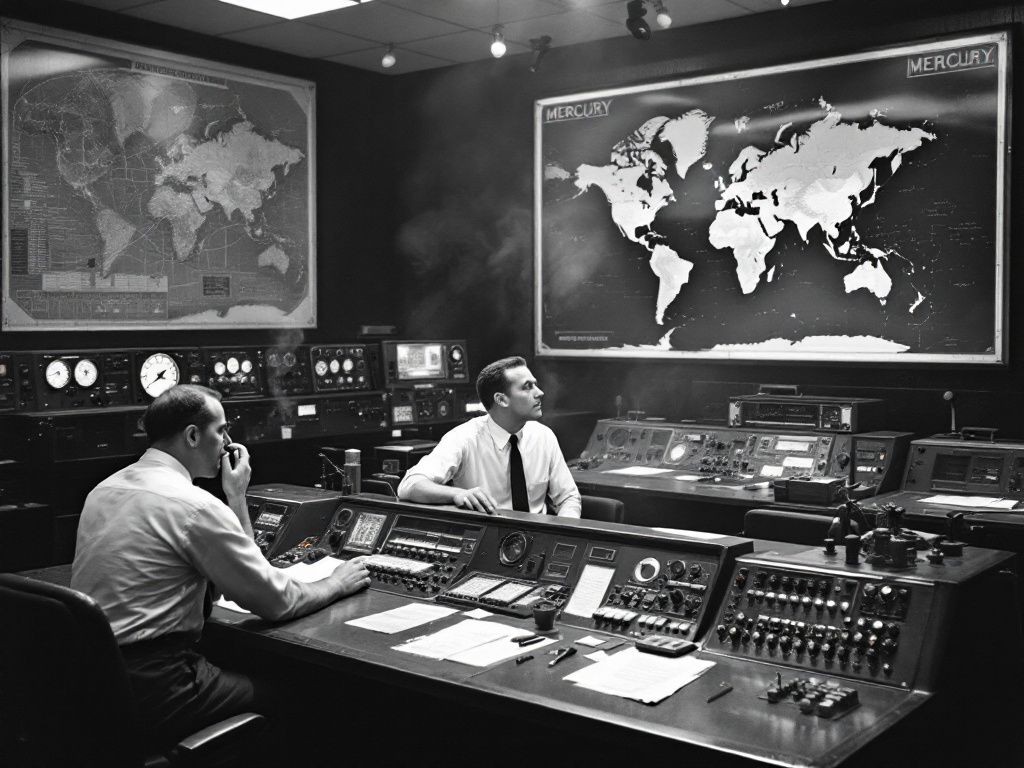
The Mission Control Center at Johnson Space Center carries a remarkable history dating back to the Gemini program in 1965. This facility became the epicenter for groundbreaking missions that captured millions of imaginations worldwide. During the Apollo era, it played a crucial role guiding astronauts through landmark lunar missions, including the historic Apollo 11 and later Apollo 17, where each command center function proved critical for safe lunar landings. As space exploration progressed, the center adapted continuously, evolving through each human spaceflight phase while ensuring successful execution of missions from the Space Shuttle program to current International Space Station operations.
The transition from mainframe-based consoles to modern distributed networks revolutionized mission data management and perception. The introduction of the MCC-21 platform, a unified Windows-based operating system, dramatically increased mission control flexibility and capability. This technological evolution went beyond simple hardware upgrades, embracing innovative approaches to command center function. Operators received tools that improved astronaut communication, streamlined data analysis, and enhanced spacecraft system monitoring throughout their space journeys.
“Failure is not an option. We’ve never lost an American in space; we’re sure as hell not gonna lose one on my watch.”
— Gene Kranz, Former NASA Flight Director
This evolution enables near-real-time decision-making with unprecedented precision. The center has integrated simulations reflecting actual mission scenarios, equipping personnel responsible for mission safety with extensive practical experience. This combination of technological advancement and human intuition ensures every spaceship and rocket achieves objectives safely. NASA’s Mission Control Center legacy continues inspiring and propelling future missions, proving that dedication paired with innovation remains central to space exploration success.
Have you ever wondered how mission control adapted from simple Mercury missions to complex ISS operations?
Evolution of Mission Control Facilities

The Mercury Control Center at Cape Canaveral managed initial Mercury and Gemini missions with basic systems and minimal support capabilities. Relocating operations to Houston’s Johnson Space Center marked a significant advancement, establishing Mission Operations Control Rooms designed for Gemini, Apollo, Skylab, and early Space Shuttle flights. Modern operational control rooms housed in Building 30 now manage International Space Station operations continuously while serving as training and backup facilities.
Additional specialized facilities include:
- NASA’s Launch Control Center at Kennedy Space Center
- Space Flight Operations Facility at JPL for uncrewed missions
- Space Telescope Operations Control Center at Goddard
| Era | Facility | Location | Key Missions |
|---|---|---|---|
| 1960s | Mercury Control Center | Cape Canaveral | Mercury, early Gemini |
| 1965-present | Mission Control Center | Houston JSC | Gemini, Apollo, Shuttle, ISS |
| Present | Specialized Facilities | Multiple locations | Various mission types |
These transitions demonstrate continuous commitment to adapting space exploration demands through enhanced technology and refined operational methods. Each facility represents decades of accumulated expertise in managing complex space missions.
The Core Functions of a NASA Command Center
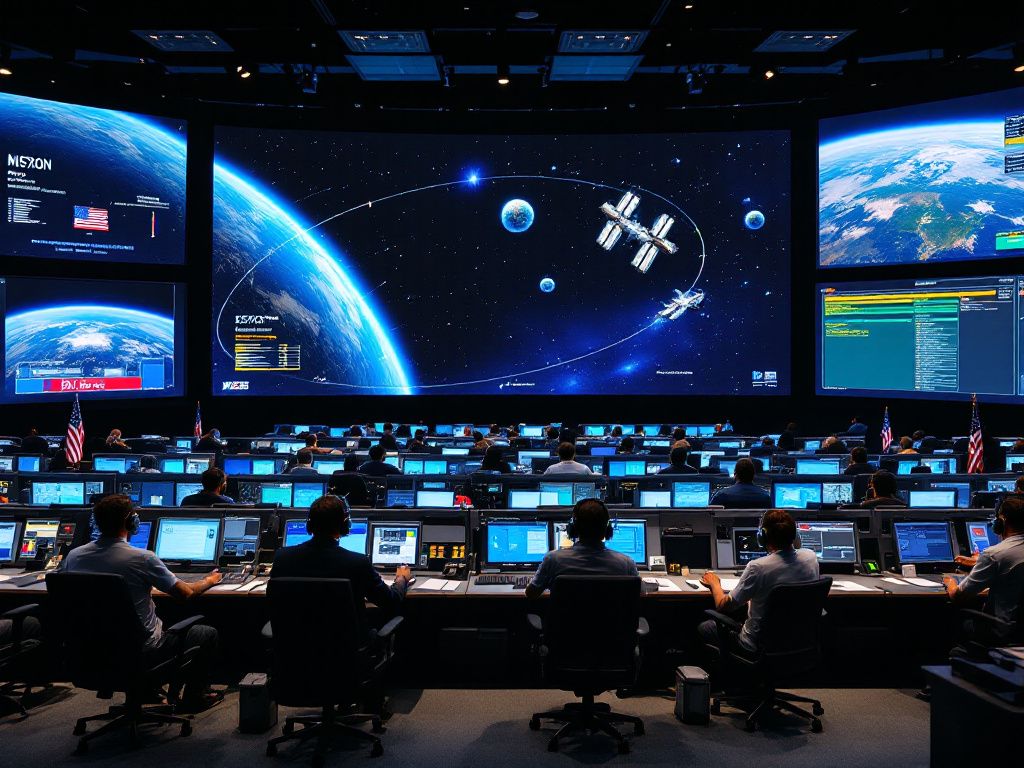
A NASA command center’s primary role involves monitoring spacecraft from launch until mission completion. Every spaceship and rocket receives meticulous tracking, ensuring continuous analysis of system status, position, and telemetry data. This monitoring allows quick identification and response to unexpected technical issues or emergencies that could compromise space missions. Command centers serve as single points for maintaining uninterrupted astronaut communication, coordinating in-flight activities like spacewalks and docking procedures, and facilitating seamless system operations during mission-critical moments.
The technology within these centers processes enormous amounts of data from multiple sources simultaneously. Engineers and operators use integrated software platforms providing real-time analytics capabilities. They monitor every subsystem and spacecraft function meticulously, ensuring even minor anomalies receive immediate attention. This capability proves crucial when unexpected changes occur in spacecraft environments, such as adjustments needed due to space weather or trajectory deviations while approaching orbital destinations.
“Every decision we make in Mission Control affects human lives in space. The technology helps us, but it’s still human judgment that makes the critical calls.”
— Holly Ridings, NASA Flight Director
Specialized support teams help command centers coordinate scientific research and experiments conducted in space. Whether collecting planetary data or testing innovative onboard technologies, mission control provides the backbone behind every significant scientific breakthrough. This dedicated oversight transforms challenges into opportunities, proving that advanced technology combined with human expertise makes these command centers indispensable. Such coordination turns complex mission plans into successful ventures across space.
What would happen if mission control lost communication with a spacecraft for even a few minutes?
Key Roles and Responsibilities of Flight Controllers
Within command center dynamics, the flight director acts as an orchestra conductor, coordinating all teams during space missions. The Capsule Communicator plays a distinctive role as the sole contact point between astronauts and ground teams, ensuring clear and precise communication. Specialized controllers include:
- Environmental and Thermal Flight Controller
- Visiting Vehicle Officer
- Flight Dynamics Officer
- Flight Activities Officer
Their combined efforts, supported by numerous engineers and technical specialists, enable command centers to address issues promptly while ensuring thorough mission management. These professionals work in coordinated shifts to provide continuous coverage, maintaining constant vigilance over spaceship and rocket systems and crew safety. Each team member undergoes extensive training to handle both routine operations and emergency situations that may arise during space missions.
Training and Education for Space Operations
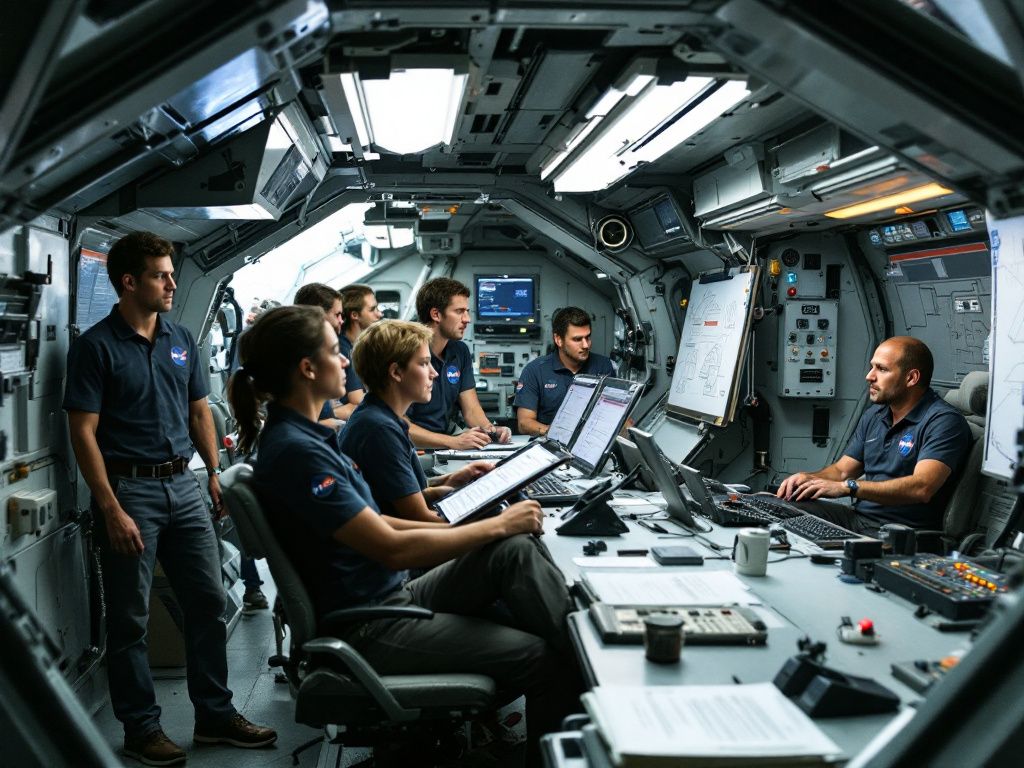
Training and education programs at Johnson Space Center require rigorous preparation extending far beyond traditional classroom learning. Training involves developing discipline and readiness necessary to manage command center challenges effectively. Astronauts and flight controllers undergo extensive preparation through real-life simulations replicating exact spaceflight conditions. These exercises cover every aspect of mission function, allowing personnel to internalize procedures for handling normal operations and emergencies.
The training regimen combines classroom instruction with hands-on practice using high-fidelity simulators and vehicle mockups. Each exercise carefully replicates the intricacies of monitoring spaceship systems and coordinating space missions under pressure. Trainees engage with part-task trainers in environments mimicking control center atmospheres, where education integration with practical experience becomes paramount. Such immersive training improves operational readiness while building essential trust between flight controllers and astronauts, enabling accurate split-second decision-making.
Intensive rehearsals, including emergency scenario practices, confirm precision’s value in this critical field. Training fosters a culture where every individual feels prepared to handle unforeseen challenges that space missions may present. Continuous education plays a significant role in evolving with technological advancements, keeping personnel updated with new platforms integrated into NASA’s command centers. Comprehensive training and educational experiences bridge the gap between theoretical knowledge and practical execution in space operations.
Can you imagine the pressure flight controllers face when making decisions that affect astronaut lives?
Educational Pathways to a Career in Mission Control
Building a mission control career typically begins with strong STEM discipline foundations. A bachelor’s degree in the following fields usually serves as the starting point:
- Mechanical engineering
- Electrical engineering
- Computer engineering
- Aerospace engineering
- Mathematics
- Physics
While pursuing advanced degrees isn’t mandatory, they can open opportunities in specialized roles within space operations. Self-motivated learning combined with computer-based training receives high appreciation in this field.
Programs and internships offered through NASA and partner institutions provide pathways for aspiring flight controllers. These opportunities, including STEM engagement initiatives, serve as valuable stepping stones into the challenging yet rewarding world of space operations. Students can participate in NASA’s educational outreach programs, internships, and research initiatives that provide hands-on experience with space mission operations and command center functions.
Conclusion
NASA’s command centers represent the core of space exploration achievements. They embody precision, collaboration, and advanced technology that skillfully transforms challenges into successful missions. Through rigorous training, innovative technology, and expert human insight, these centers continuously push boundaries of what’s achievable in space. They are more than facilities – they are living demonstrations of humanity’s drive to explore beyond earthly limits. With every rocket launch and critical decision, command centers stand as steadfast guardians of progress in space exploration.
“Our mission control centers represent the best of American ingenuity and international cooperation, proving that when we work together, there’s no limit to what we can achieve in space.”
— Bill Nelson, NASA Administrator
FAQs
What is the primary NASA command center for human spaceflight?
The Christopher C. Kraft, Jr. Mission Control Center in Houston, Texas, serves as the hub for all crewed space missions.
What kind of education is needed to work in mission control?
A bachelor’s degree in STEM fields such as engineering, physics, or mathematics is typically required, often supplemented by extensive specialized training programs.
How do flight controllers prepare for missions?
They undergo rigorous training including classroom instruction, high-fidelity simulators, vehicle mockups, and detailed practice of emergency scenarios.
Does SpaceX have its own mission control?
Yes, SpaceX operates a dedicated mission control center in Hawthorne, California, focused on coordinating rocket launches and landings for their space m